

If you’ve ever worked with wire mesh, especially for filtration, you’ve probably heard people talk about “mesh count”. Honestly, it sounds technical, but it’s not all that complicated once you break it down.
At RajFilters & Wiremesh Pvt. Ltd. we answer questions about mesh size every day. Customers want to know how to select the right one, whether it’s for industrial filtration, screening, or separation. Once you understand mesh count, the entire selection process gets a lot less intimidating.
Let’s get straight to the point. Here’s what you really need to know about mesh count and why it matters so much for filtration.
What is the Mesh Count?
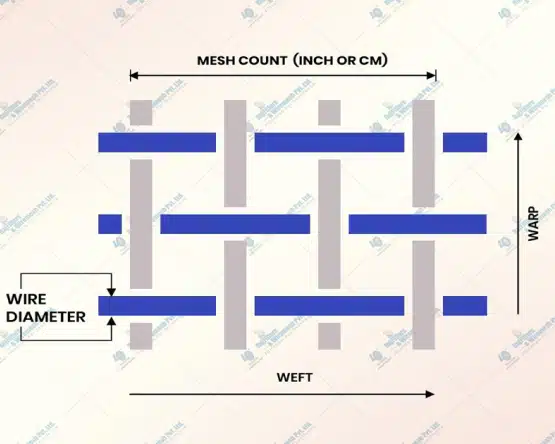
Mesh count is the number of openings per linear inch of wire mesh. That’s it. It’s a simple way to figure out how fine or coarse the mesh is.
So if you have a 10 mesh screen, there are 10 openings per linear inch.
A 50 mesh? 50 openings in a linear inch.
A 100 mesh? You guessed it, 100 openings in a linear inch.
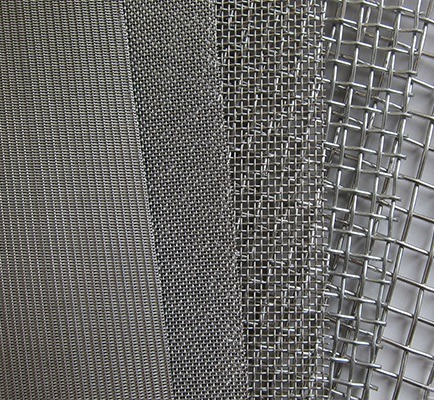
It’s quite straightforward: the higher the mesh count, the smaller each opening will be. So, if you need to filter out tiny particles, a higher mesh count is necessary. If you’re only catching bigger stuff, choose a low mesh count.
Imagine it as a sieve from your kitchen. If the holes are big, flour flies through, and the lumps get left behind. If the holes are small, only the finest stuff gets through. Wire mesh works the same way; the size and number of holes decide what is trapped and what passes through.
We make wire mesh ranging from just 3 mesh all the way up to 1400 mesh, so industries have options no matter what they need to filter out.
Mesh Count vs Aperture Size:
Now, there’s another term you might hear: aperture size. It’s related to mesh count, but not quite the same.
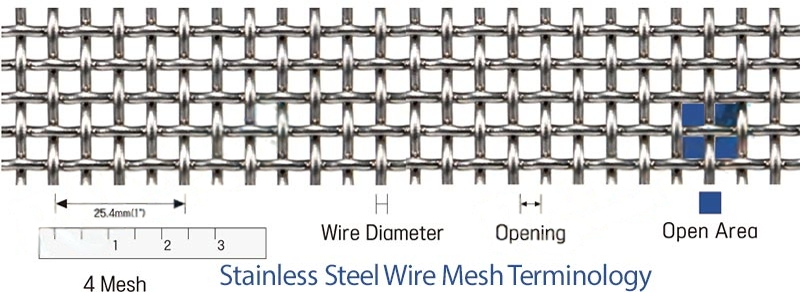
Mesh Count: how many openings per inch.
Aperture Size: the actual width of each opening.
Increase the mesh count, and the aperture size decreases. That’s how you catch finer particles.
Industries like pharma, food processing, chemicals, and polymers need these higher mesh counts because their processes demand extremely fine filtration.
Why Mesh Count Actually Matters?
Selecting the correct mesh count isn’t some minor technical choice. It seriously affects how well your filtration system works.
Filtration Accuracy: With a higher mesh count, you capture smaller particles. That means cleaner results. Smooth flow: The suitable mesh keeps everything moving efficiently, yet still catches the junk.
Quality Control: Solid filtration prevents contamination, which is a must for many manufacturers. Protecting equipment: Mesh filters prevent debris from entering pumps, valves, or other expensive machinery.
Where are the Different Mesh Counts Suitable?
You’ll use different mesh screens depending on your specifications and requirements.
Low Mesh Count (Big Openings): Ideal for mining, recycling, plastic processing, or any application where you need to separate large particles.
Medium Mesh Count: Used in water treatment, chemical processing, oil filtration, and even food manufacturing.
High Mesh Count (Fine Filtration): Necessary for pharmaceuticals, labs, and polymer processing, where even the tiniest speck matters.
In simple terms, a 200 mesh stainless steel screen can stop very fine particles. A 10 mesh? More effective for catching large debris.
What Else Affects in Wire Mesh Performance?
So, mesh count isn’t the only thing to look at, and other factors make a difference too:
Wire Thickness:
Material (SS304, SS316, SS316L, Copper, Brass, Inconel, Monel, etc.)
All these factors impact the durability of the mesh, its lifespan, and its efficiency in filtration.
Why Consistent Quality Matters:
For industrial needs and requirements, you require mesh that’s consistent from start to finish. Even a minor difference in the pattern or the size of the opening may affect filtering efficiency.
At RajFilters & Wiremesh Pvt. Ltd., we pay attention to the minute details, uniform weaving, precise mesh count, and consistent quality. This is the reason our mesh is effective in numerous sectors, everywhere from India to the rest of the world.
After more than forty years in the business, we’re still here delivering high-quality stainless steel meshes and tailored filtration solutions to customers who want things done right.
Bottom Line: Mesh count might sound simple, but it stands as one of the most crucial specs you’ll deal with in filtration.
Lower Mesh Count = Bigger Holes
Higher Mesh Count = Finer Filtration
Choose the right mesh count, wire material, and diameter, and you’ll get solid filtration and smooth operations.
Are you Stuck on Which Wire Mesh to Choose for Your Filtration Plant?
Reach out to a trusted and reliable manufacturer who really knows what they are doing and get the best solution for your wire mesh needs.
